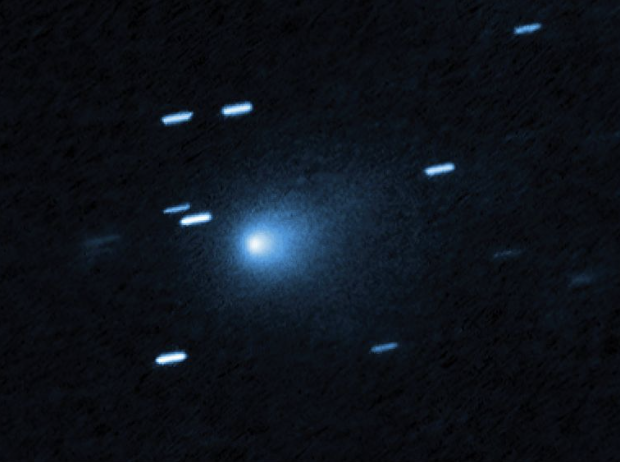
This image made astronomers pause.
Not because it’s beautiful —
but because it didn’t behave the way a comet should.
The stars are streaked.
The comet is sharp.
And instead of one smooth tail, multiple asymmetric jets erupt from its surface, switching on and off as it rotates.
This is 3I/ATLAS — an object that entered our Solar System from interstellar space, never to return.
For months, as more data came in, one question kept resurfacing — quietly at first, then louder:
Is this… artificial?
That question wasn’t asked out of fantasy, but out of responsibility.
When something arrives from another star system and shows unexpected motion and structure, science doesn’t dismiss possibilities — it tests them.
So we did.
Radio telescopes listened.
Space telescopes resolved the jets.
Spectroscopy broke the light apart.
No signals. No engines. No technology.
What we’re seeing is natural physics — unfamiliar chemistry, pristine ice, and a surface that has never before met a Sun like ours.
3I/ATLAS is not alien technology.
But it is something extraordinary:
a natural messenger from another star system, briefly crossing our skies and reminding us how little of the universe we truly know.
Sometimes the cosmos feels strange not because it’s artificial —
but because it’s vast, ancient, and far more diverse than our intuition allows.
Let’s uncover the story of the comet that made millions look to the stars in the second half of 2025
1. A faint light entered our Solar System.
It wasn’t orbiting the Sun.
And it didn’t behave like anything we were used to.
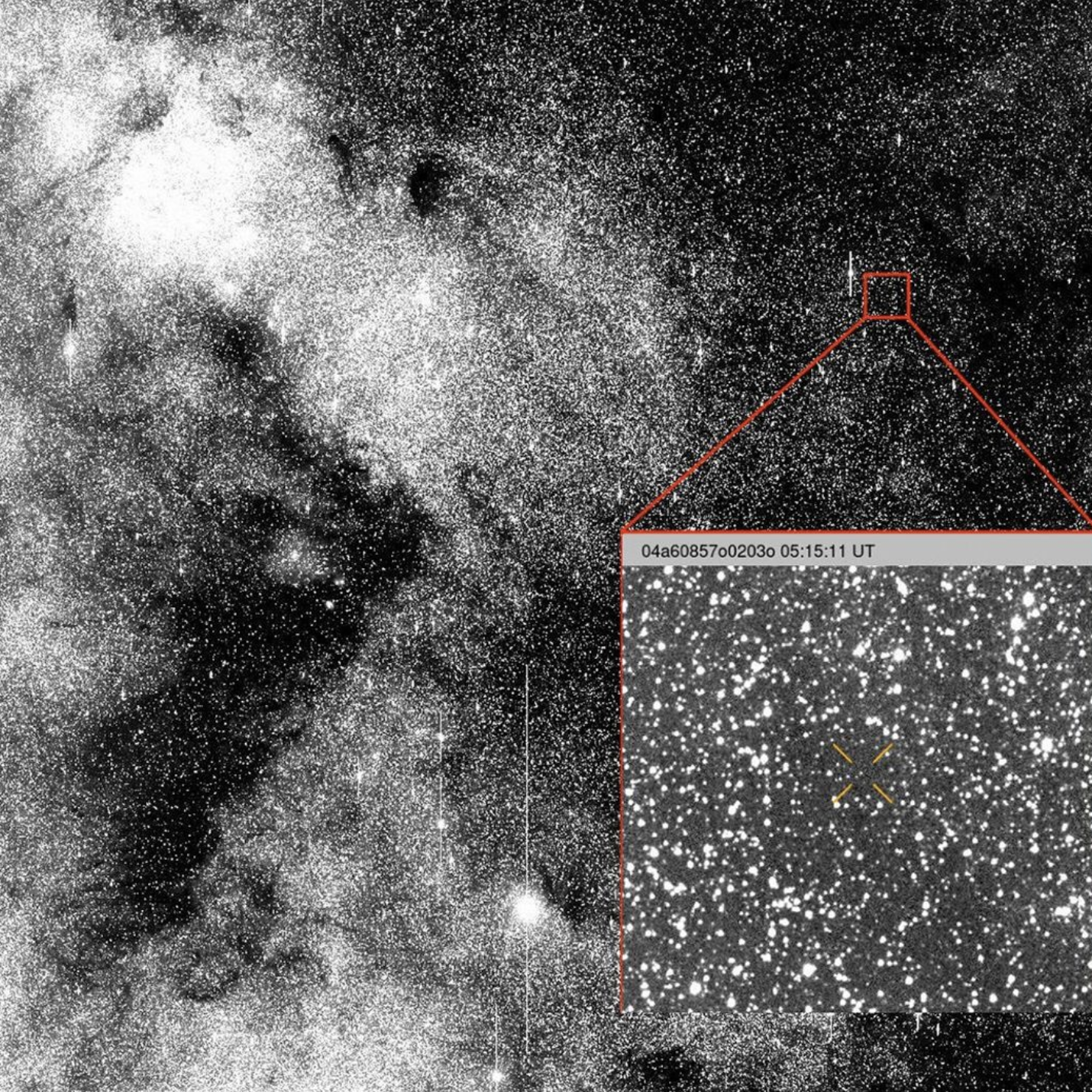
This image shows the observation of comet 3I/ATLAS when it was discovered on July 1, 2025. The NASA-funded ATLAS survey telescope in Chile first reported that the comet originated from interstellar space.
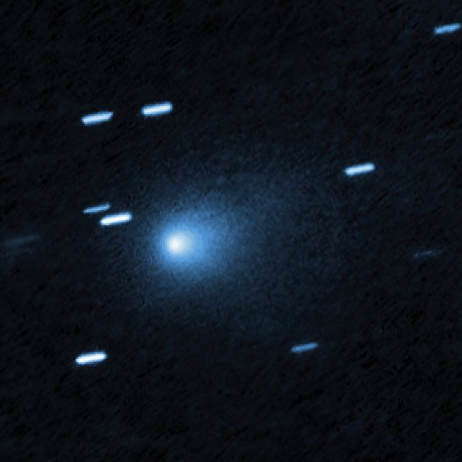
Hubble captured this image of the interstellar comet 3I/ATLAS when the comet was 277 million miles from Earth.
On 1 July 2025, automated sky surveys operating under the ATLAS program detected a faint new object moving against the background stars. At first glance, it looked unremarkable — one of many small comet candidates discovered every year.
That changed within hours.
As follow-up observations refined the orbit, astronomers realized the object was on a strongly hyperbolic trajectory. It was not gravitationally bound to the Sun. It had not formed in our Solar System. And it would never return.
This single fact placed it in an extraordinarily rare category:
only the third confirmed interstellar object ever observed, after ʻOumuamua (2017) and 2I/Borisov (2019).
The object was officially designated 3I/ATLAS.
What puzzled astronomers at this stage was not its brightness or size, but its origin. Interstellar objects are shaped by environments we do not directly observe — other stars, other disks, other radiation fields. There was no reliable template for how this visitor “should” behave.
It wasn’t just a new comet.
It was a fragment of another planetary system.
2. Multiple jets.
Asymmetric outgassing.
Subtle accelerations not explained by gravity alone.
For months, one question kept coming back — from scientists and the public alike:
Could this be artificial?
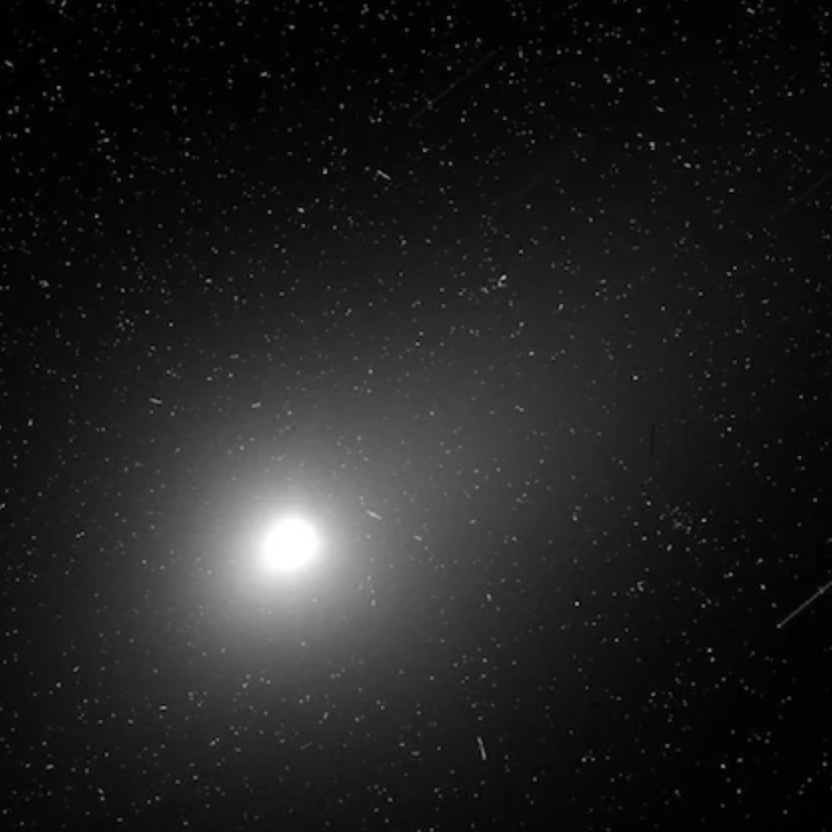
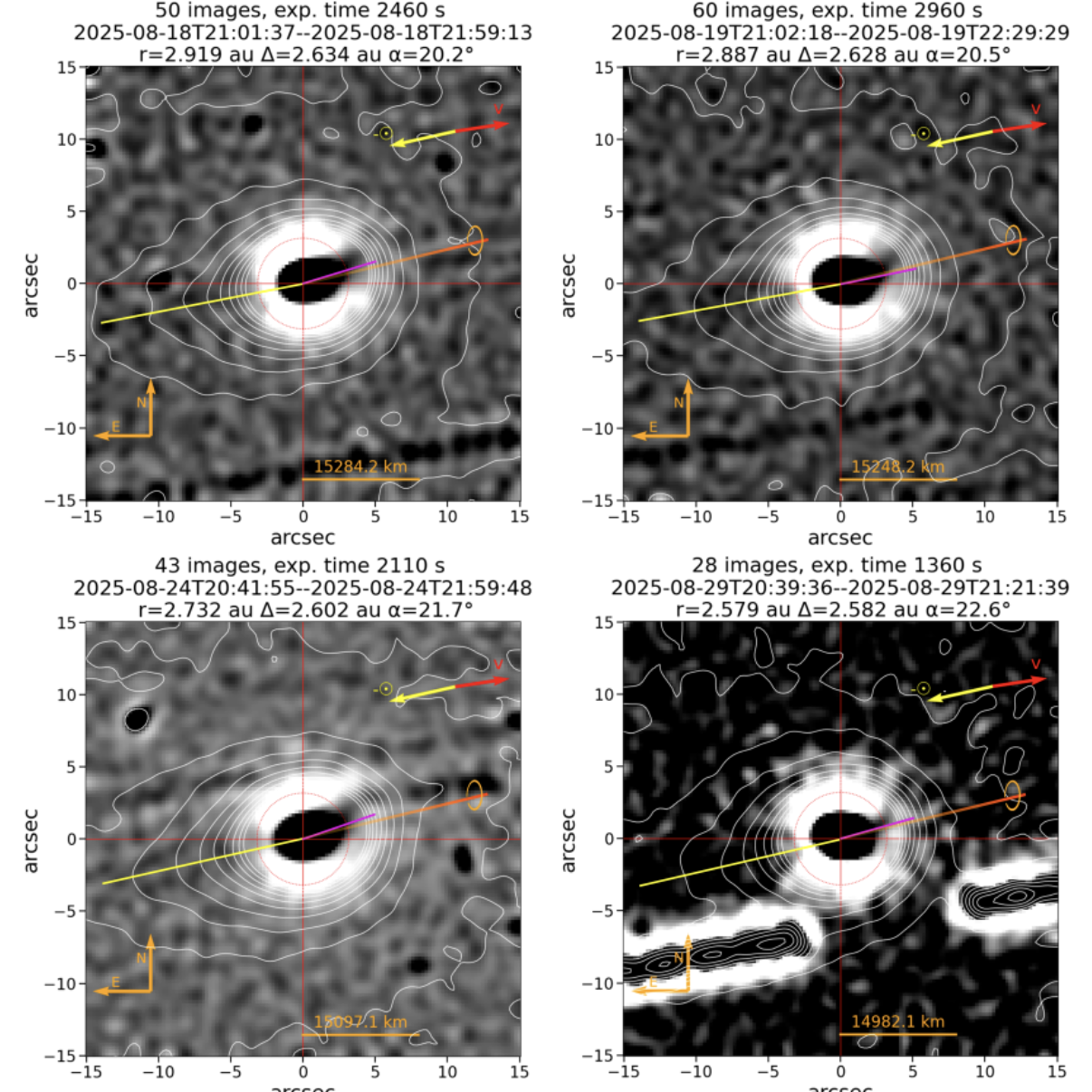
Although not a Hubble frame, this composite image from the Two-Meter Twin Telescope (TTT) at Teide Observatory (observed across multiple nights) shows the wobbling jet patterns and evolving coma structure as 3I/ATLAS moved closer to the Sun.
By mid–July 2025, telescopes around the world — and in space — had begun detailed monitoring of 3I/ATLAS.
The comet showed clear activity: a coma formed, and multiple jets emerged from its surface. But the activity was uneven. Jets appeared asymmetric, changed with time, and varied with the comet’s rotation.
On 21 July 2025, early Hubble Space Telescope images revealed this behavior in striking detail. The jets were not clean or symmetric, and the comet’s appearance differed noticeably from many familiar Solar-System comets.
At the same time, precise astrometric measurements showed that the comet’s motion required small non-gravitational corrections. Gravity alone could not fully explain its trajectory; outgassing was exerting measurable force.
None of this violated physics — but the combination mattered.
An object from another star system, showing unfamiliar jet behavior and subtle accelerations, forced astronomers to pause and reassess assumptions. With no prior history for this body, every possibility had to be examined carefully.
It was during this period — late July and August 2025 — that a question quietly resurfaced, both inside and outside the scientific community:
Could this be artificial?
Not because scientists wanted it to be.
But because when something arrives from another star system and behaves unexpectedly, you check.
3. So we listened.
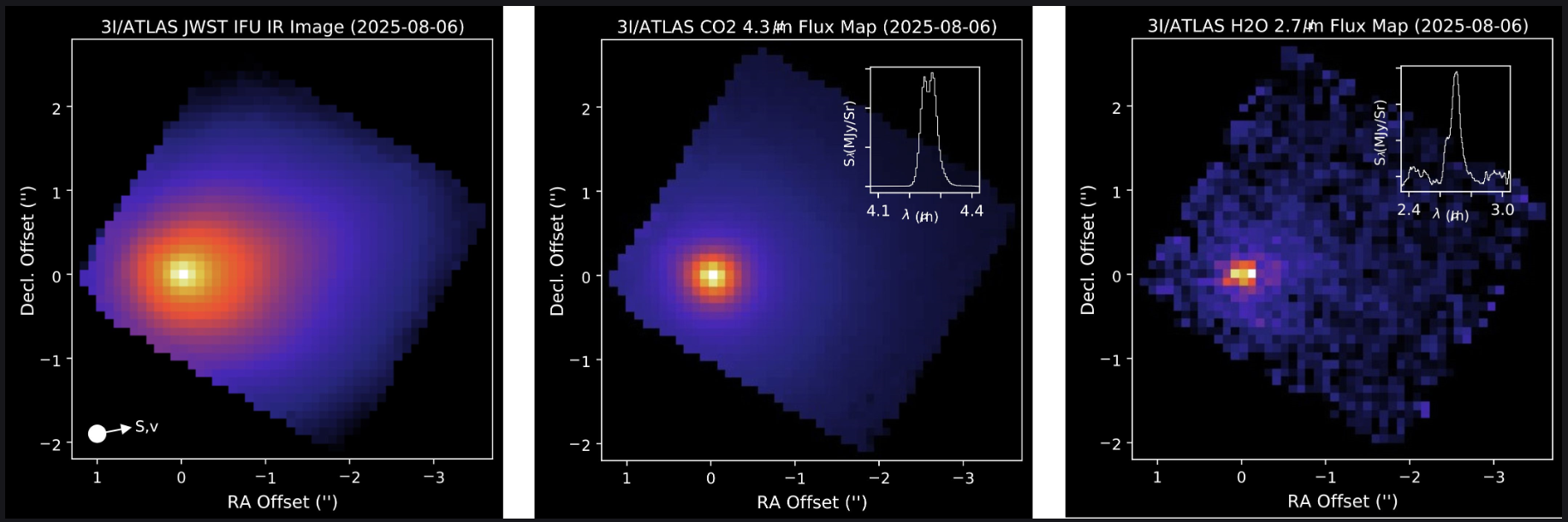
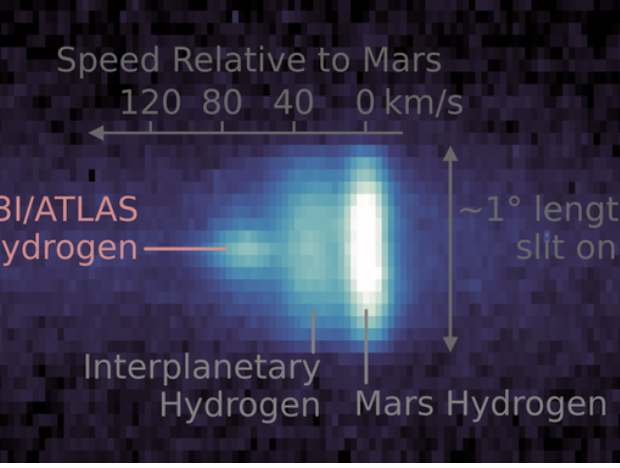
From August through December 2025, the response was systematic and global.
Space telescopes mapped the structure and evolution of the coma and jets, confirming that the activity followed patterns expected from volatile-driven outgassing on an irregular, rotating nucleus.
Spectroscopic observations revealed familiar cometary molecules — water vapor, carbon monoxide, and carbon dioxide — but in proportions that differed from many Solar-System comets, reinforcing the conclusion that 3I/ATLAS formed under different chemical conditions.
At the same time, radio observatories turned their attention to the object.
Programs associated with SETI, including Breakthrough Listen, explicitly scanned 3I/ATLAS during its best observing windows, particularly around its closest approach to Earth on 19 December 2025 (still a safe ~1.8 AU away).
They searched for:
- narrowband radio emissions
- artificial modulation
- signals inconsistent with natural astrophysical processes
Radio telescopes searched for signals.
Space telescopes mapped the jets.
Spectroscopy revealed water, carbon monoxide, carbon dioxide.
They found nothing.
No engines.
No transmissions.
No technology.
What remained was a consistent picture: a natural interstellar comet, rich in volatile ices, reacting to our Sun for the first time in its long existence.
Just natural physics — unfamiliar chemistry from a place far beyond our Sun.
4. 3I/ATLAS is not alien technology.

But it is something almost as valuable:
a natural probe from another star system, passing through our cosmic backyard.
By the time it began leaving the inner Solar System in early 2026, 3I/ATLAS had answered several fundamental questions through observation alone.
It showed us that:
- planetary systems elsewhere produce comets too
- interstellar space is not empty
- our Solar System’s chemistry is not the universal template
It also revealed something about ourselves.
The speed with which the question “Is it artificial?” spread was not a failure of science — it was a reflection of human curiosity. A deep-rooted desire to know whether we are alone, whether the universe might one day answer back.
In the end, 3I/ATLAS carried no message and no technology.
What it carried instead was perspective.
It reminded us why astronomy matters —
because sometimes the universe looks strange not because it’s artificial,
but because it is bigger, older, and more diverse than our intuition allows.